Pacific Alliance for Autonomous Traditions, Indigenous Sovereignty
PAFATIS is an acronym for Pacific Alliance For Autonomous Traditions, Indigenous Sovereignty. Pafatis also means to sort through harvest to be shared with family and friends in Pangcah/ Amis.
The cultures of Indigenous Peoples on the Pacific Islands are rich and enduring. Despite the erosion, imposition, and restructuring brought by dominant civilizations, these cultures have retained their core integrity and subjectivity. Through the dedicated efforts of community members and scholars, parts of these unique, non-mainstream cultural traditions have been preserved, while other fragmented elements are being carefully reassembled. These surviving Indigenous cultural expressions also evolve by interweaving with mainstream culture and gradually taking on new forms.
Our organization’s name represent the power that connect Indigenous Peoples across the Pacific Islands, the power that protect the rights to land, ocean, data, and cultural sovereignty Indigenous Peoples deserve. Our name also represent the resilience and mutuality of the Indigenous Peoples of Pacific Islands.
Through inter-island dialogue, community empowerment, and knowledge sharing, we aim to deepen connections among Indigenous Peoples of the Pacific Islands. We remain committed to supporting Indigenous self-determination, cultural transmission, environmental governance, and the exercise of sovereignty over Land and Sea. We consistently support Indigenous communities in actively participating in the United Nations Permanent Forum on Indigenous Issues and work in partnership with grassroots Indigenous organizations across the Pacific Ocean to advance shared advocacy and collective action.

Art by Ngayaw Sayang
Upcoming Events
2026 UNPFII Series: The Path to Healing Beyond Conflict for Indigenous Peoples in Taiwan
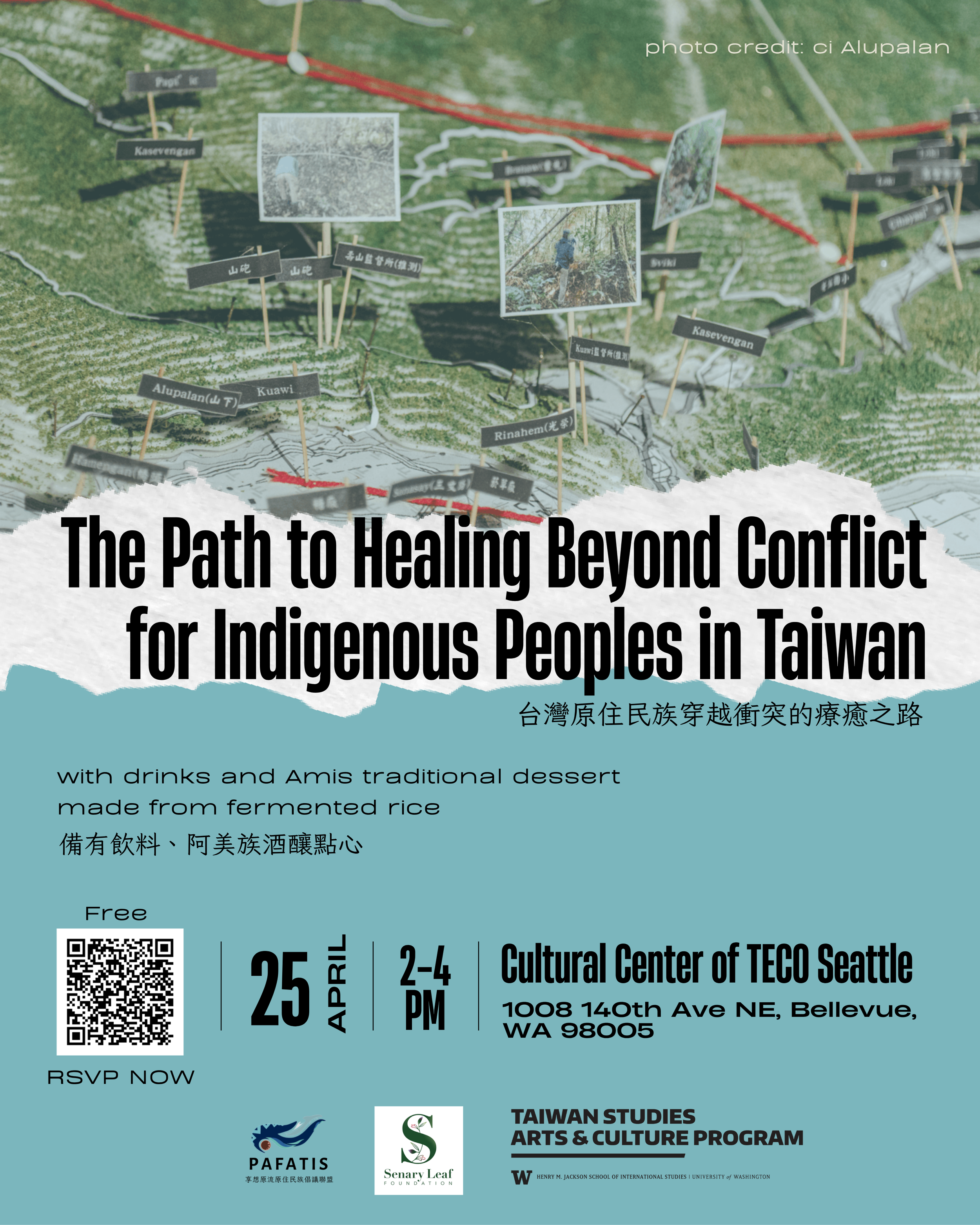
2026 UNPFII Series: The Path to Healing Beyond Conflict for Indigenous Peoples in Taiwan
The 2026 United Nations Permanent Forum on Indigenous Issues (UNPFII) is themed “Ensuring Indigenous Peoples’ health, including in the context of conflict.” The Forum explores how Indigenous Peoples build holistic models of well-being through institutional frameworks, community mutual support, and traditional knowledge, including food systems and cultural practices.
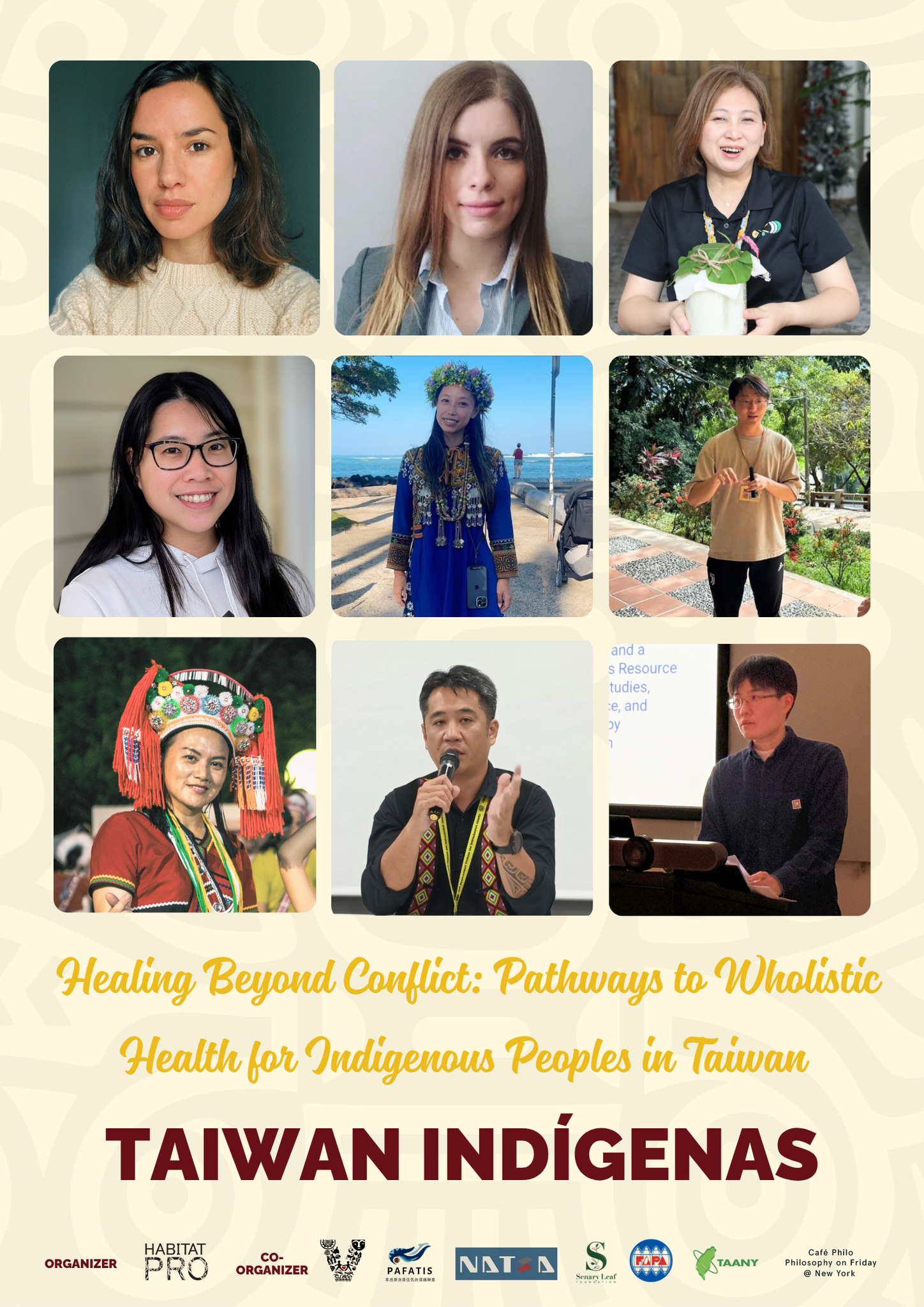
PAFATIS is co-organizing an official UNPFII side event in New York in partnership with Habitat Pro Association, Hualien County Association of the Promotion of Indigenous Affairs, Senary Leaf, TAANY, and FAPA NY Metro Chapter. We are also hosting/ co-hosting a series of related events in both New York and Seattle. These events foreground the knowledge, innovations, and practices of Taiwan’s Indigenous Peoples. In these events, speakers representing Pangcah (Amis), Atayal, and Paiwan will illustrate pathways to healing, resilience, and self-determination beyond conflict.
April 16, 10:30-12:20 pm @ Burke Museum (East Classroom), UW Campus, SeattleGuest Lecture within Indigenous Taiwan and the Pacific (JSIS A 480)This guest lecture focuses on how patterns, materials, and techniques reflect Indigenous understandings of wholistic health, community healing, and conflict resistance.
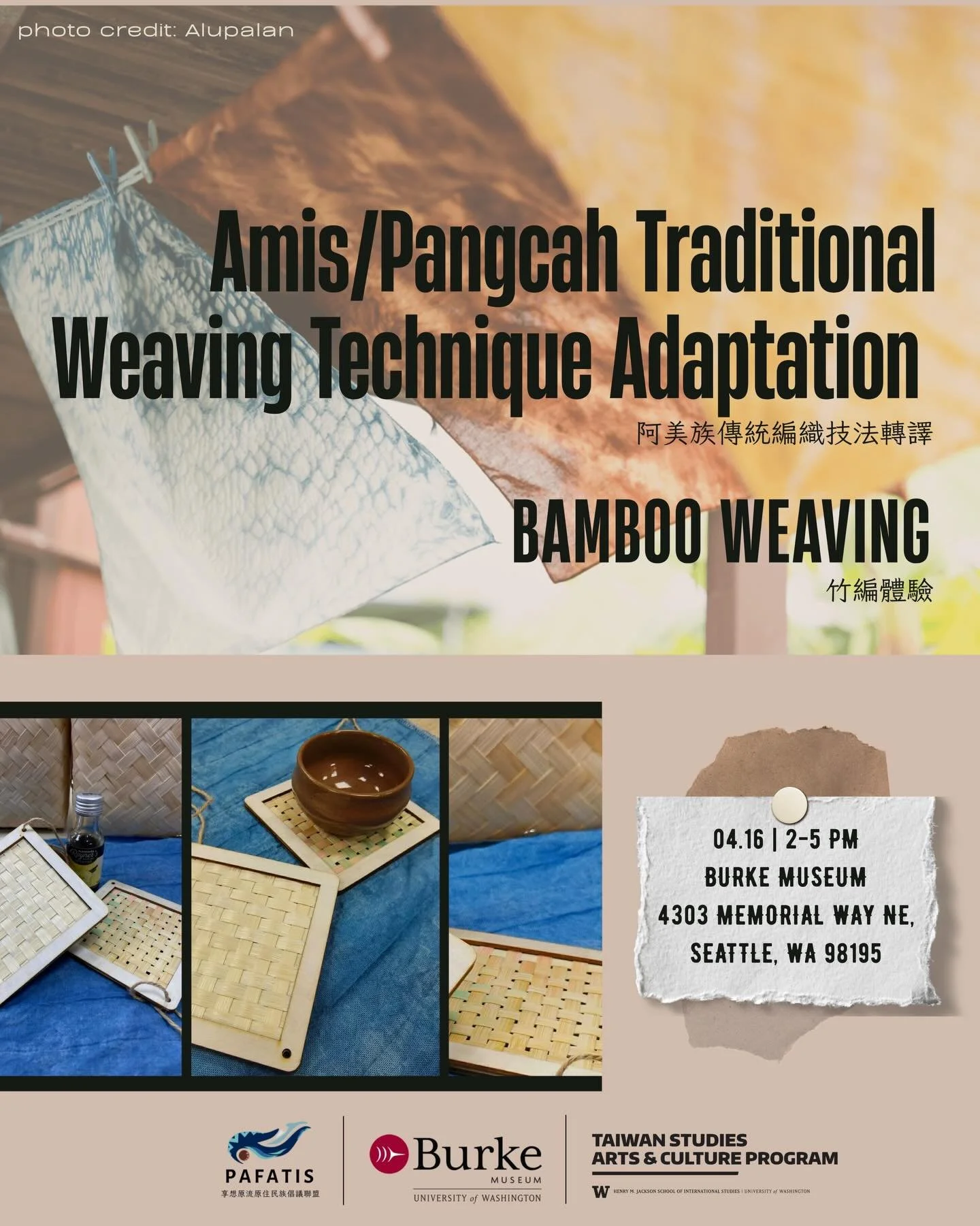
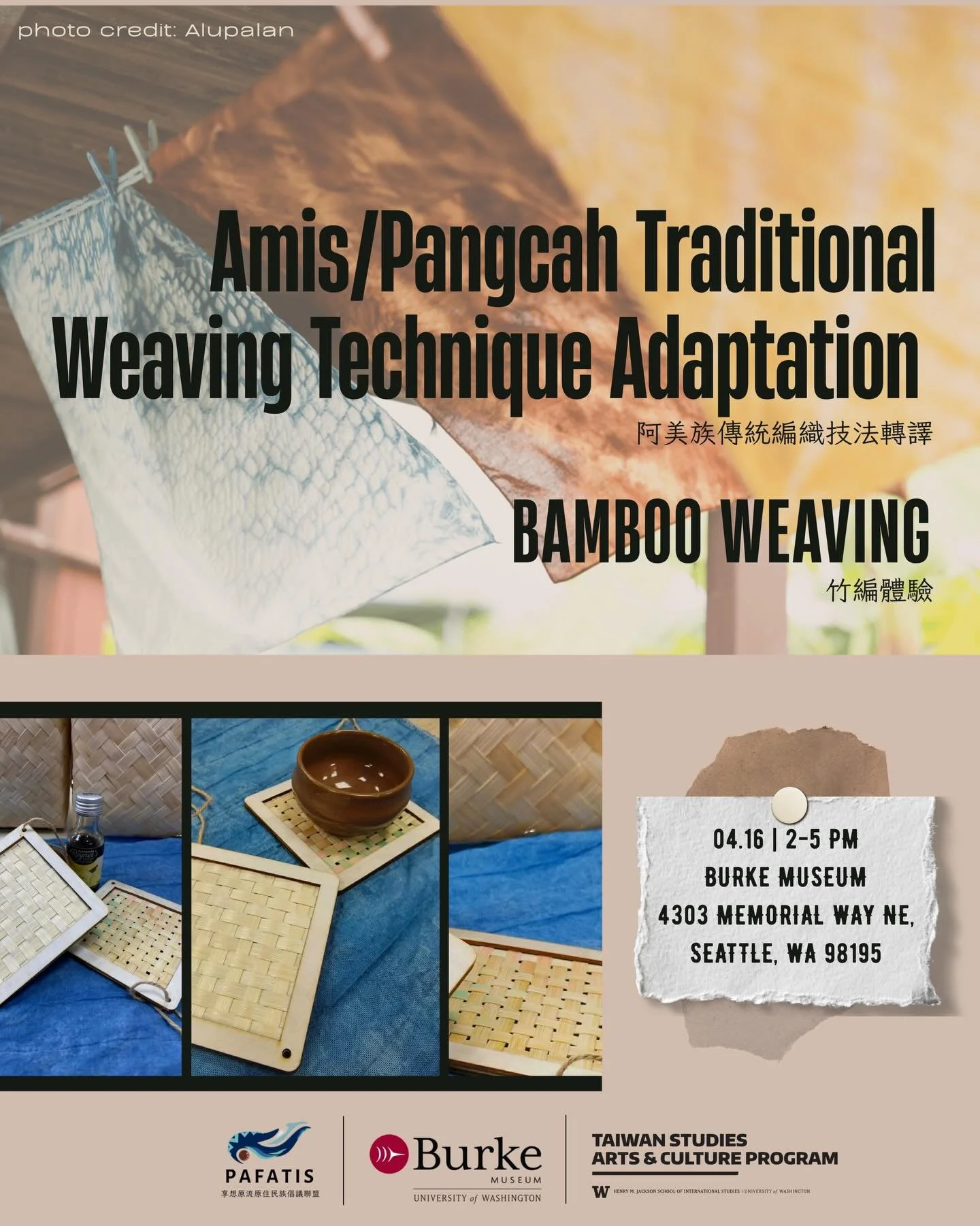
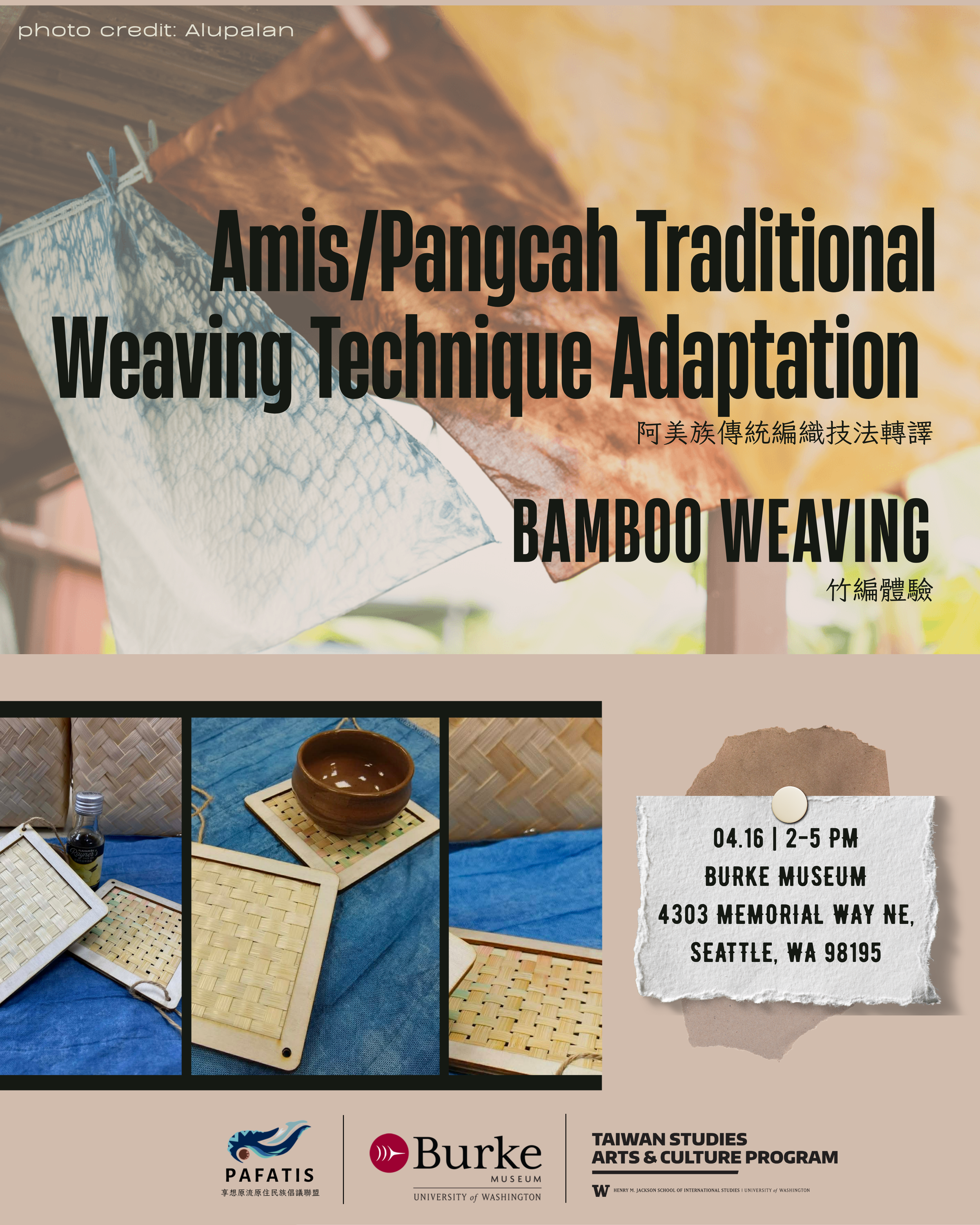
April 16, 2-5 pm @ Burke Museum (Museum), UW Campus, SeattleAmis (Pangcah) Traditional Weaving Technique Adaptation: Bamboo WeavingA hands-on workshop exploring Amis bamboo weaving as a living tradition of cultural knowledge, ecological practice, and community resilience.
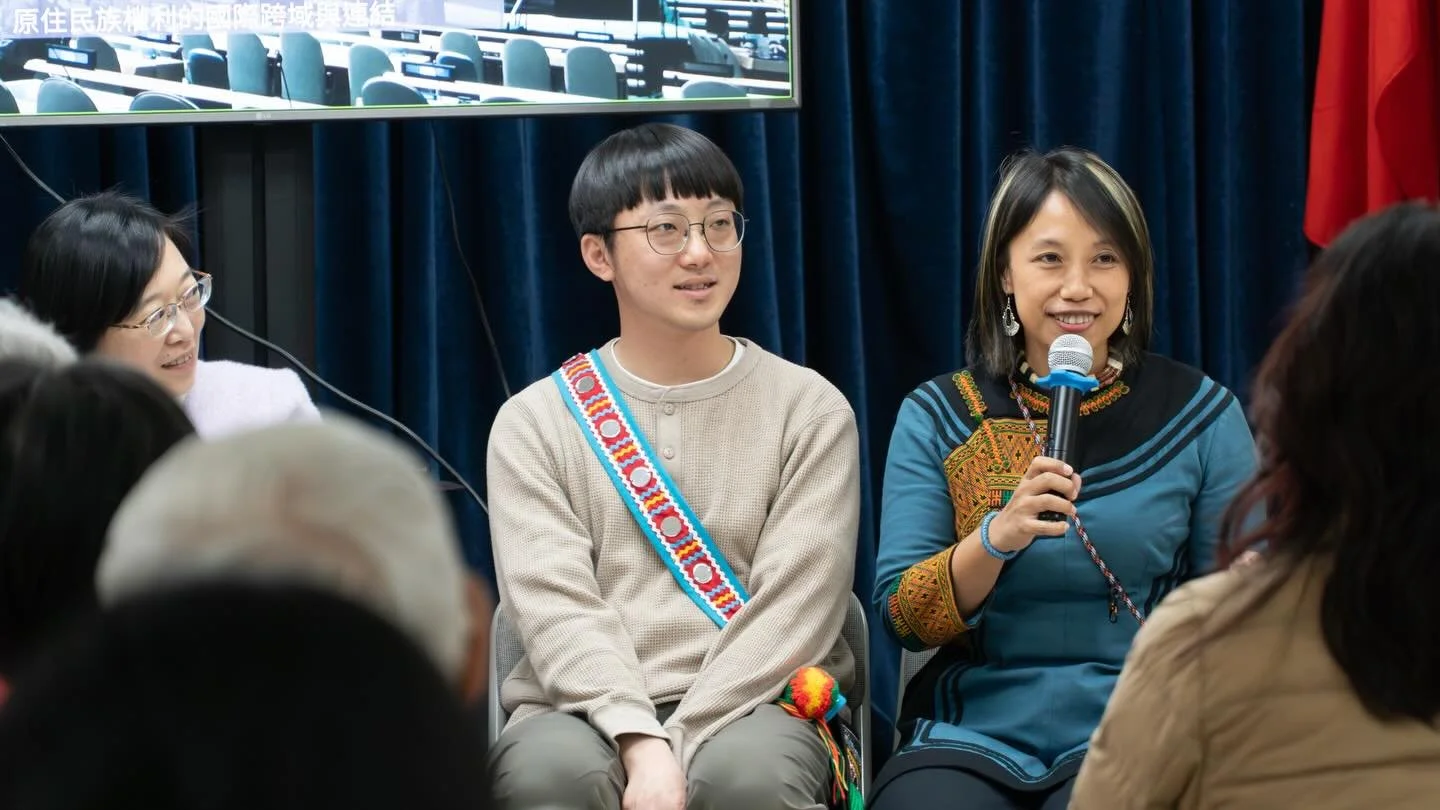
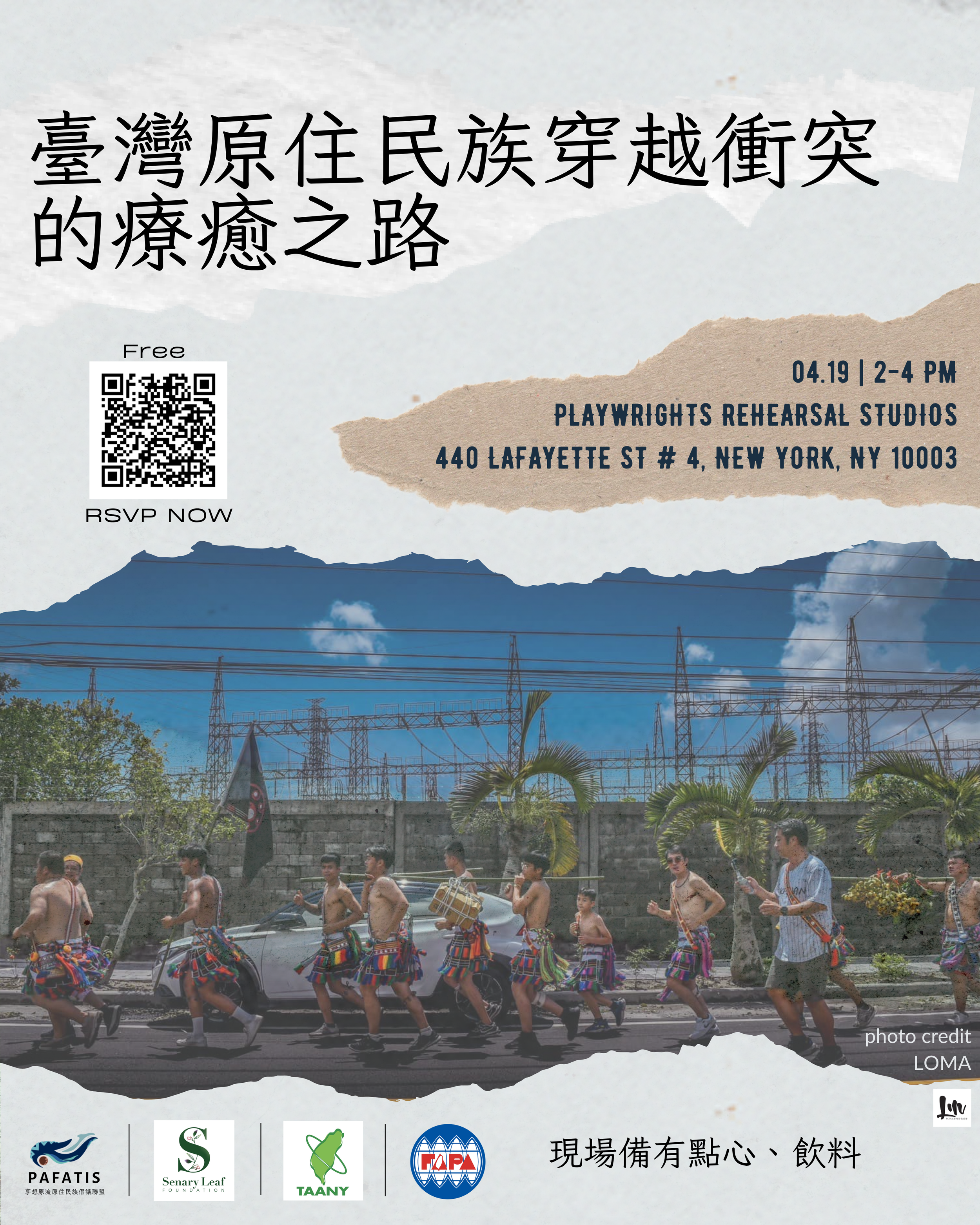
April 19, 2-4 pm @ Playwrights Downtown, New York (Room 3B)UNPFII周邊講座 | 臺灣原住民族穿越衝突的療癒之路呼應本屆常設論壇的主題,透過臺灣原住民族代表從人權機構運作、社區實踐(紫絲帶防護網等)到飲食傳統智慧切入,分享臺灣原住民族在健康自主與文化復振的經驗。RSVP
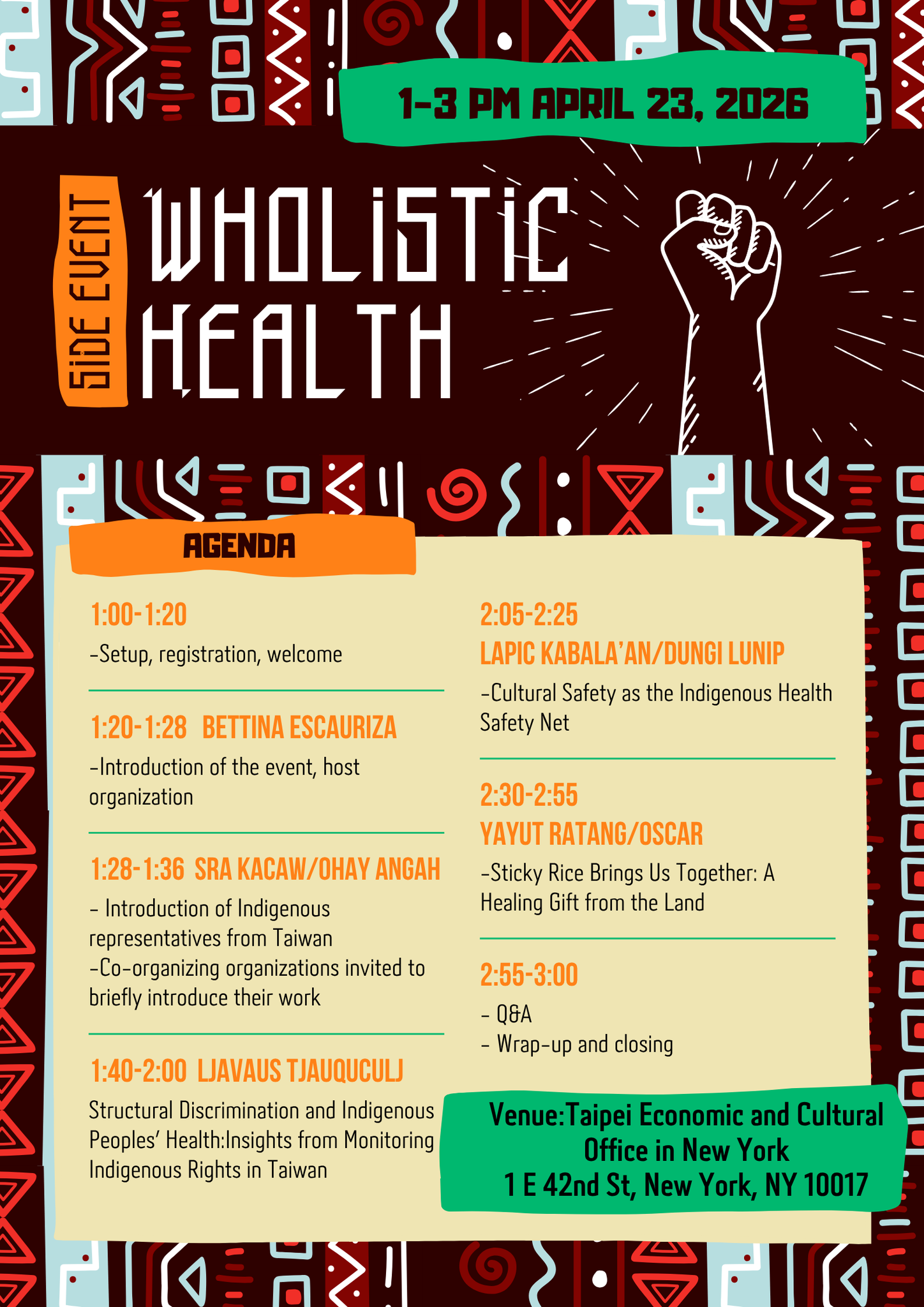
April 23, 1-3 pm @ Taipei Economic and Cultural Office (TECO), New YorkUNPFII Side Event | Healing Beyond Conflict – Pathways to Wholistic Health for Indigenous Peoples in TaiwanAn official UNPFII side event, in English, exploring how Indigenous health, healing, and well-being are embedded in community practices, knowledge systems, and legal frameworks.
Specifically, we aim to echo the Forum’s theme through these three perspectives:
Systemic protection: Through sharing experience managing national human rights organizations and advocacy, we will explore the importance of eradicating systemic discrimination.
Community work: We will share how indigenous health theories collaborate with communities, as well as how the anti-violence Purple Ribbon movement promotes communal healing.
Traditional food wisdom: Through introducing how Indigenous Peoples have passed down generations of food choices, cooking methods, and eating customs, we will explore ways to co-exist with nature, promote sustainability, and build wholistic mind-body health.
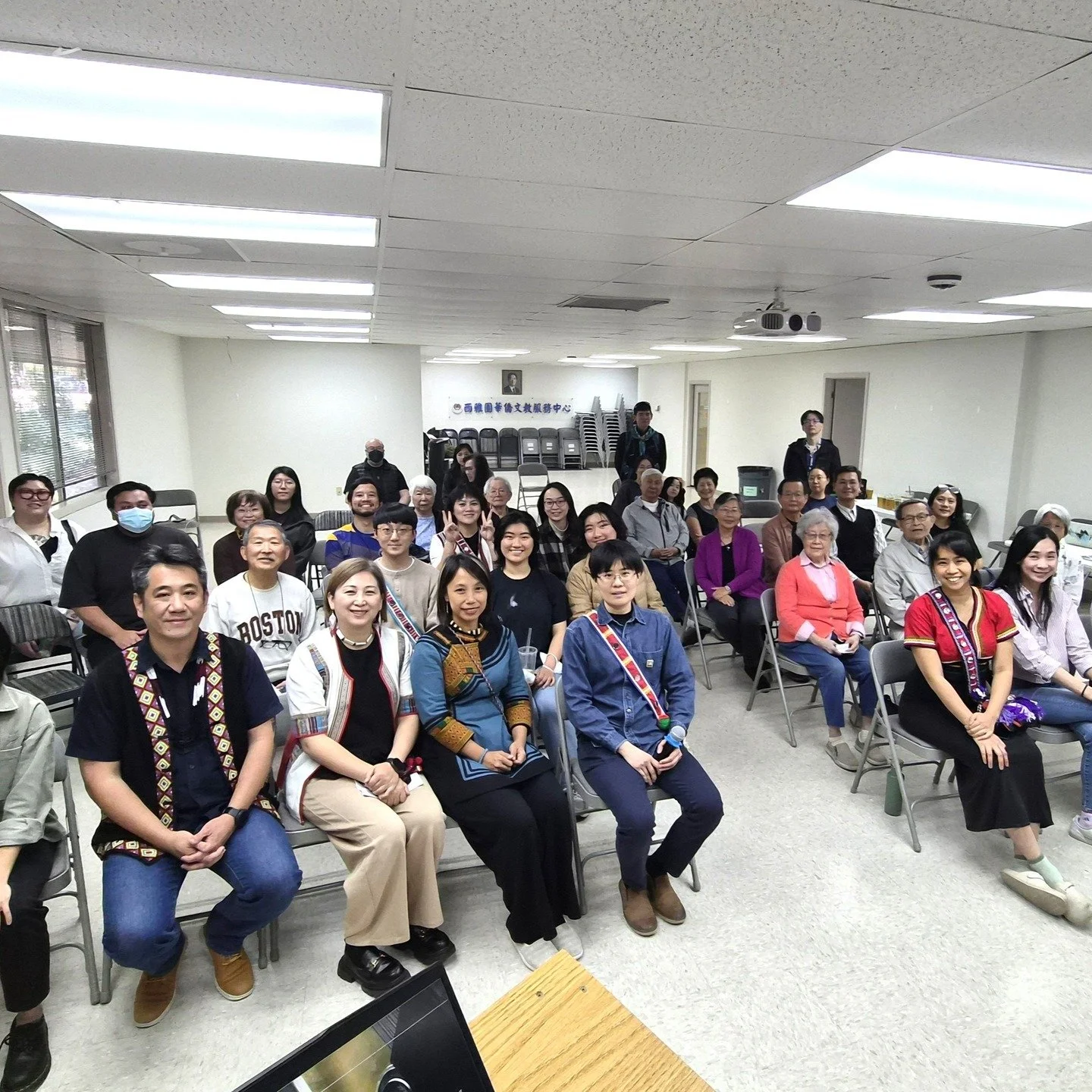
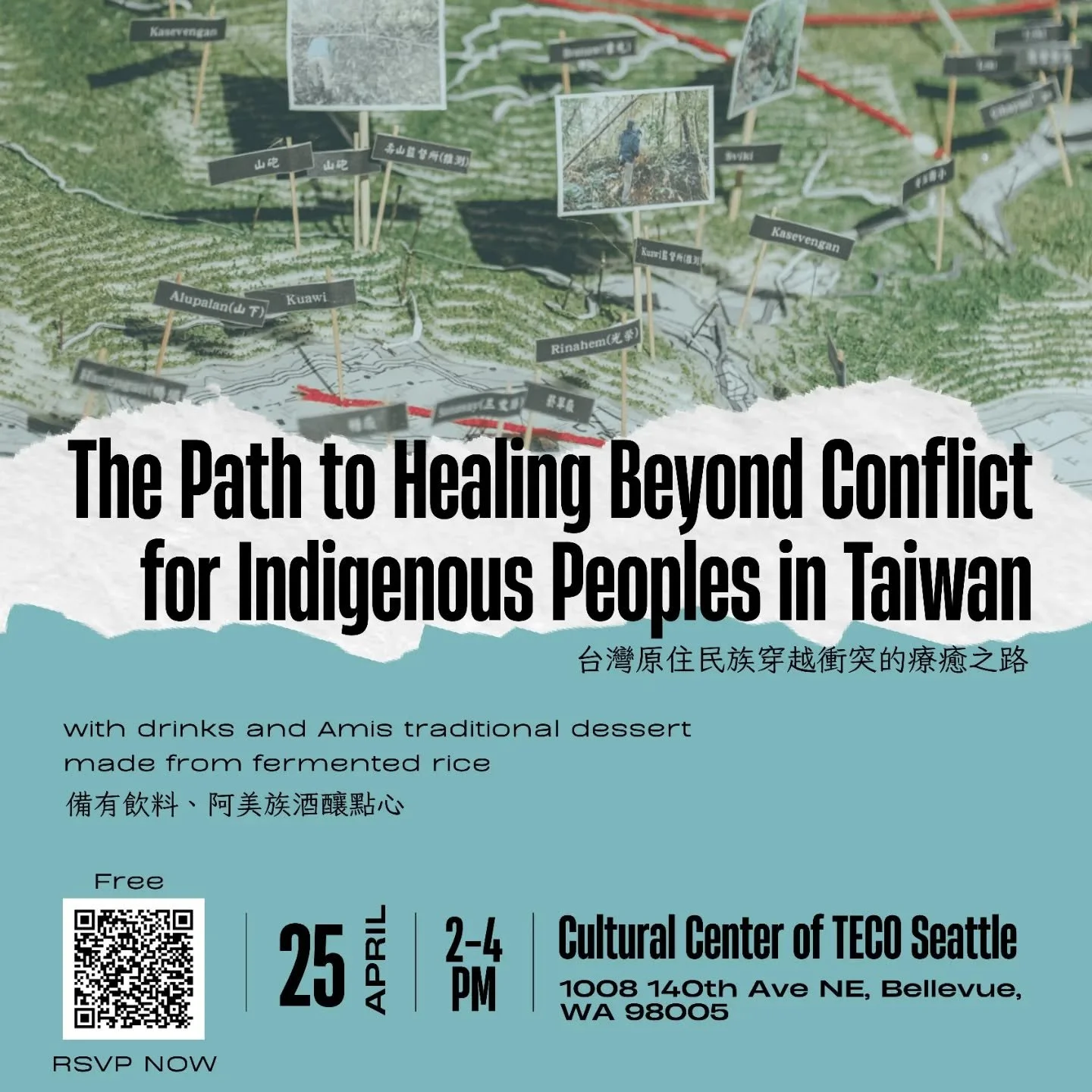
April 25, 2-4 pm @ Cultural Center of TECO in Seattle (僑教中心)UNPFII Side Lecture | The Path of Healing Beyond Conflict for Indigenous Peoples in Taiwan | A concluding session that brings together experiences from Taiwan’s Indigenous communities and fosters dialogue on transnational connections and shared healing practices. Speakers will share in Mandarin. Interpretation to English will be provided. RSVP
Essays
-
The Perfect Victim Myth
After the recent barrier lake burst in Hualien, many on social media have shared the gratitude they’ve received from tribal community members. They were invited to share meals and drinks; some were also invited to attend the Ilisin Festivals in August. Under such posts, others have also replied to remind Han people that such invitations are a way tribal community members express their gratitude; at the same time, boundaries should be respected. Otherwise, Han ideas about emotions and charity could easily reinforce colonial dynamics.
We have also seen the “perfect victim” myth taking off on social media. Whether it is the photos military personnels uploaded on Threads or Instagram, or videos of survivors and volunteers having fun, these images have come under attacks and scrutiny. However, one-dimensional interpretations of these images have flattened the complexity and totality of surviving a disaster. Such narratives have also boxed the survivors’ experiences as one where only suffering is allowed.
When people who live in cities expect people in more rural areas to fit the “perfect victim” image, coupled with the fact that the areas are homes to Indigenous Peoples, such expectations reinforce Han-centric thinking. For tribal communities, emotional and cultural expressions like dancing, singing, rituals, and daily joys are important resources for collective healing and reconstruction. If others only sanction the expression of grief but not everything else, they also deny tribal communities the mechanisms and path to healing that is driven by the communities themselves.
Helping that Prioritizes Self-Determination and Empowerment
Speaking of healing, our last article calls for the national and local governments to prioritize the tribal communities’ demand for “interim housing solutions.” Here, we’d like to further our discussion to think about helping. When we are helping, what are some perspectives that can help us avoid reinforcing systemic inequity pre-disaster? When intervening, how can we prioritize Indigenous worldviews and self-determination? How can we approach helping with a power-with and not power-over standpoint?
Before the disaster, Fata’an residents are people with complex lives and emotions. Before September 23, the tribal communities have had thousands of years worth of traditional wisdom, age-set system, ways of living, and economic structure. However, from social media to popular narratives around the experiences of disasters, survivors often get labeled as “victims” or “those receiving help”. Such labels not only flatten their experiences but also deny them the chance to define their own relationship to the disaster.
In modern society’s narratives around disaster, the imagination of the “perfect victim” is often embedded in how emotions are displayed in public. Such narratives expect “victims” to appear embroiled in grief, silence, and helplessness. But such expectations are merely projections of how society expects people to experience suffering. Empathy, reporting, and institutional support often only arrive when survivors display such expectations. This is also confounded by Han society’s stereotypes of Indigenous Peoples and microaggressions against the latter (Note 1).
In this sense, the helper and those receiving help have both fallen into a re-enactment of moralities. Those whose behavior falls outside of the norms of such re-enactment are viewed as “not sad enough”. When survivors show their strength, humor, or joy, the public critiques whether they are deserving of help.
Relationship as the Basis of Helping in order to Avoid Cultural Colonization
The September 21 earthquake and Typhoon Morakat exhibited the government’s imagination of the needs of those receiving help. After these disasters, the government built permanent housing for survivors. However, such plans not only severed tribal communities’ access to collective healing, they also reflect how the government operates from a Han worldview in responding to tribal communities’ resettlement needs. The government didn’t acknowledge how public infrastructures like settlements, road-building, and logging have affected the land and the ecosystem. They also used “helping” to cloak efforts at further colonization.
Indigenous Peoples were forced to accept the idea of Individual property ownership, prominent in Han worldview. After Typhoon Morakat, 85% of Indigenous survivors left their communities and their homes. However, they only received ownership to the permanent housing but not ownership to the land, which restricts the use of the land and limits farming and hunting. Under contracts of permanent resettlement, survivors also could not go back to their original homes to rebuild or to farm. Indigenous worldview places high importance to connection with the land and living beings associated with the land. Unfortunately, the government and charitable organizations severed such connections in the name of “helping.” (Note 2)
Taiwan Association for Indigenous Social Work pointed out that post-disaster support should be based on relationships. Helpers should respect tribal communities’ age-set system and decision-making mechanisms. Helpers should not position themselves as “professionals” or “saviors.” Instead of making commands, helpers should support, accompany, and listen to tribal communities members to learn about the communities’ rhythms, way of life, social structure, needs, knowledge, and relationships. (Note 3)
This time, we hope the government can have more conversations with local communities in designing post-disaster relief and resettlement plans. While helping, the government can honor Indigenous Peoples’ self-determination. Rebuilding encompasses more than just building houses. We hope the government can prioritize tribal communities’ resilience with more listening, respect, and empowerment.
Note 1:【花蓮救災浪漫化的微歧視】-- 原轉. Sbalay!
Note 2:永久屋:安居表象下的人權陷阱-- 台權會
Note 3: 馬太鞍溪溢流災後重建:社工進入Fata’an等部落指引-- 臺灣原住民族社會工作學會
-
What tribal communities need is not the government making decisions for them. Instead, the government should listen to, respect, and implement tribal communities’ voices. Only then will tribal communities be able to actually participate and communicate effectively in the decision-making process.
Homes of the Fata’an tribal community in Hualien were swallowed by floodwater, silt, and sediment following the bursting of a barrier lake. While disaster relief and cleaning are important, we also believe more importantly is the question– how are survivors of the disaster going to be settled? How can we maintain the community’s power and dignity in the reconstruction process?
In recent years, the government’s common and main approach to post-disaster settlement was to put survivors in hotels or build permanent housing. However, such policy often lacks consent from the survivors, nor does it prioritize survivors’ needs.
This time, the Fata’an tribal community’s voice was loud and clear: What the community needs is an interim housing strategy, not permanent housing.
What is an Interim Housing Strategy?
Dr. Shu-Mei Huang pointed out that an interim housing strategy is not a hastily strewn-together cargo home or shed. It is short-term housing designed for “living with dignity.” It is designed to cover both families’ basic needs and common space for communities. Residents should be able to live, without worry, for one to three years. During this time, the government and communities gather information, discuss, and make decisions for reconstruction.
Dr. Ying-Hao Huang further explained that at the core of interim housing is the “collective.” Only by living together are tribal community members able to brainstorm collectively on how to rebuild their home. While putting survivors in hotels across the county provides temporary comfort, it inadvertently weakens the community’s resilient and social network, pushing survivors to recover in isolation.
Tribal Community’s Demand: Leave the Disaster, Not Our Home, Behind
The Fata’an Mutual Aid Association made five clear demands. The most crucial one is “leave the disaster behind, not our home.” They reject permanent housing and demand construction of interim housing in Danongdafu Forest Park, in their ancestral land.
Such demand is more than emotional support. It is a rational choice for the governance and culture of the tribal community. The mutual aid system inherent to the community’s sociocultural fabric– Pangcah/ Amis age-set system, church system, and local community– was key to expedient post-disaster relief efforts. Separately resettling tribal community members will sever these systems and weaken resources for rebuilding.
We want to join the demand– interim housing is not just “somewhere to stay temporarily.” It is a necessary foundation to tribal communities’ healing, cohesion, and envisioning of future community rebuilding.
The Government Must Act Immediately
The government has put forth the “7+7 Hotel Settlement Plan” or policy driven by permanent housing. Such policies do not respond to Fata’an’s actual needs. If no adjustments were made, we are afraid to see the tragic aftermath from the 921 Earthquake and Typhoon Morakot again, where communities’ voices were neglected and communities separated.
We demand the national and local government to:
Assess appropriate plots. Prioritize implementing an interim housing strategy within Fata’an’s ancestral land.
When planning the interim housing strategy, ensure ample participation from tribal community members and lean on the social capital provided by traditional tribal community organizing and church systems.
Incorporate public spaces, cultural spaces, living needs, and industrial needs in the planning of interim housing strategy. Do not plan only for sheds that meet minimum requirements.
The government has proposed for the National Land Management Agency to help assess rent assistance and relocating to social housing for the severely impacted 89 households on Fozu Street. But such proposals have not received input from tribal community members; they also ignore the tribal community’s demand for interim housing strategy.
We want to reiterate– policies should avoid isolating tribal community members on Fozu Street. Policies should avoid forcing them to leave the collective. The government should not build housing complexes without consulting with tribal community members. Instead, the government should understand Indigenous Peoples’ culture and honor tribal community members’ agency to participate in policy discussions. Residents should not be treated as passive agents who can only see decisions made for them. The government should ensure the time, degree, and scope to which residents participate in decision-making. The government must further include and respect the opinions of tribal communities.
Do Not Let the Disaster Sever Tribal Communities Again
Post-disaster reconstruction is more than building houses. It is the rebuilding of relational networks in a society and the continuation of culture. If policies only treat survivors as “aid-receiving individual households” instead of a “community with self-determination and self-governing capabilities,” reconstruction efforts are foundation-less.
At the end of this article, we would like to cite Dr. Shu-Mei Huang’s observation. In post-disaster reconstruction efforts in Tohoku, Kumamoto, and Noto Peninsula in Japan, interim housing strategies provided more than a roof over residents’ heads. They also included public facilities, shopping streets, and workshops to allow residents to continue their lifestyles and preserve community ties. Such designs allow survivors to recover from the severance of disasters and to birth a new future.
The Fata’an tribal community’s demand further reminds us that post-disaster resettlement needs to treat “tribal community” as a unit and “interim housing” as the core. Only then can tribal community members leave the disaster behind without leaving their home behind. Only then can they head toward recovery in dignity and agency. This not only reflects Fata’an’s needs but also a lesson Taiwan must learn every time it faces a disaster in the future.
-
Nikal has many names: her Han Taiwanese name, her English name, but her Indigenous name was the last to enter her life. When she participated in a language nest program in Taipei, a classmate’s grandma gave her this name, which the teacher then wrote down in romanized form on a small slip of paper. At that time, the writing system for the language was only just becoming more widely known, so her spelling differs slightly from the now more common “Nikar” (are there others here named Nikar or Nikal? Come say hi!).
Later, Nikal became a mother and pursued law studies in the United States. Before leaving, during the pandemic, she began using some online resources that allowed her whole family to learn their Indigenous language together. After moving to the U.S., she continued learning with her children through online materials and picture books she had brought from Taiwan.
Since her children came to the U.S. before school age, the household has been multilingual over the years. Yet the current challenge is clear: their English grows stronger, their Mandarin remains good enough for communication, but their Pangcah has stayed at a standstill. Nikal often wonders: is it because she hasn’t tried hard enough?
When an Indigenous language is not the primary means of communication in daily life (something not only experienced by families like Nikal’s living abroad), its use requires deliberate effort, and it inevitably comes with challenges. Yet Nikal still believes this: even if progress feels stagnant and slow, every additional word, phrase, or sound that enters her and her children’s minds is a seed.
This seed carries its own nutrients and is meant to be stored, full of Pangcah wisdom and ways of knowing the world. One day, when the conditions of warmth and moisture are right, it will begin to sprout.
Huiyu, through her doctoral research, engaged in in-depth conversations with teachers, parents, and community members at the Cou Saviki Tribal Classroom, documenting the work of Cou language and culture preservation. The Saviki Tribal Classroom was established in 2002, initially to provide a safe space for children whose parents were busy in the fields. A group of community mothers accompanied the children and supported their homework. Over time, the classroom gradually became an important place for preserving the Cou language and culture. Today, after more than twenty years, it continues to demonstrate the resilience and commitment of the Saviki community.
Through classroom observation and interviews with the Cou teachers, Huiyu recorded how the classroom’s teaching and learning reflect Cou worldviews and traditional values—connections that are crucial for cultural and language preservation. However, like Nikal’s experience, the Saviki community also faces challenges sustaining their language. With the legacy of colonial language plannings and the post-colonial language ideologies in Taiwan. It takes extra and intentional effort to maintain the daily use of their language. Despite ongoing pressure from dominant cultural narratives, the Saviki Tribal Classroom continues to teach Cou language and culture, ensuring the next generation can preserve and carry on their Cou heritage. In doing so, these Cou teachers hope to plant seeds of cultural pride and self-recognition in their students, eventually blossoming into a lifelong connection to their culture. For the children, the classroom feels like home, helping them understand themselves and their culture—a home that is always there.
At the end of this post, we also would love to share a few Indigenous language revitalization groups and community networks that PAFATIS currently knows. (We also welcome everyone to leave comments with other groups or resources you know!)
Pipalofasaran to Sowal no Pangcah/'Amis 台灣阿美族語言永續發展學會/原民會阿美族語言推動組織
-
As a Taiwanese person who indulges in braised pork rice regularly, how would you feel if, in an international presentation of Taiwanese cuisine, pork were replaced with another ingredient? Do you think such a representation accurately captures Taiwan’s food culture?
On Dragons’ Den, a Canadian reality show, a boba tea company pitched its bottled version of boba fruit tea. The company, Bobba, claimed its product was healthier than the original drink. They also claimed the original drink was trendy but contained unknown ingredients. It wasn’t until the show’s judge and actor, Simu Liu, criticized Bobba of cultural appropriation that the company disclosed that they worked with a Taiwanese partner. But the damage was done. Bobba was criticized for not respecting the cultural origin of the beloved drink.
Similar experiences should not be foreign to Taiwanese Indigenous Peoples. In 2022, the Taiwan Economic and Cultural Office (TECO) in San Francisco hosted an event promoting Paiwan Culture. However, it was obvious that the performers’ outfits were not the traditional clothing of the Paiwan people. After members of the Paiwan communities raised their concerns, TECO removed the photos of the event from their social media accounts.
We were disappointed to see that, when the Ministry of Foreign Affairs’ international youth ambassadors visited the Marshall Islands, Hawaii, and Guam in August, they wore stereotypical Indigenous clothing and performed what Han people deemed as “Indigenous dance.”
The government might have intended to show the audience Taiwan’s cultural diversity and wanted to distinguish Indigenous Peoples’ cultures from the dominant Han culture. At the same time, the government inadvertently appropriated Indigenous Peoples’ cultures due to their unfamiliarity, lack of understanding, and lack of engagement with Indigenous communities. The government tried to promote Taiwanese culture internationally by using Indigenous Peoples’ clothing, traditions, dance, music, and other cultural artifacts. In this process, we wonder whether the government has ignored Indigenous Peoples’ rights to define their own cultures? Has the government ignored how, under centuries of colonialism, the systemic oppression that Indigenous Peoples have faced in preserving their cultures?
The above incidents highlight power asymmetry in society. Dominant groups tend to control resources, voice, and discourse in cultural promotion and representation. Marginalized groups’ cultures often become oversimplified and stereotyped. Marginalized communities also often lose the right to define their own way of living and culture. Even though the government held positive intent, it is important to recognize, honor, and prioritize the voices and historical contexts of those who actually practice the culture. Otherwise, we risk cultural appropriation and further perpetuation of systemic inequity.
We look forward to the government holding more respect for Indigenous Peoples’ self-determination when promoting Taiwan’s diverse culture. We also hope that the government can invite marginalized communities to be equal partners in designing events of similar intent in the future. Only then can diverse communities represent themselves in the way they want.
Social Media